Living containers
Living containers range from a simple housing module for accommodating fitters to a well-designed tiny house with kitchen, bathroom and living area. Quality depends on insulation thickness, a construction with few thermal bridges, a ventilation concept and the building services. Anyone planning to live in one permanently needs a building permit and must meet the requirements of the German building energy act.
Typical uses
- Tiny house as a permanent main residence on your own plot
- Weekend and holiday home by the lake or on a campsite
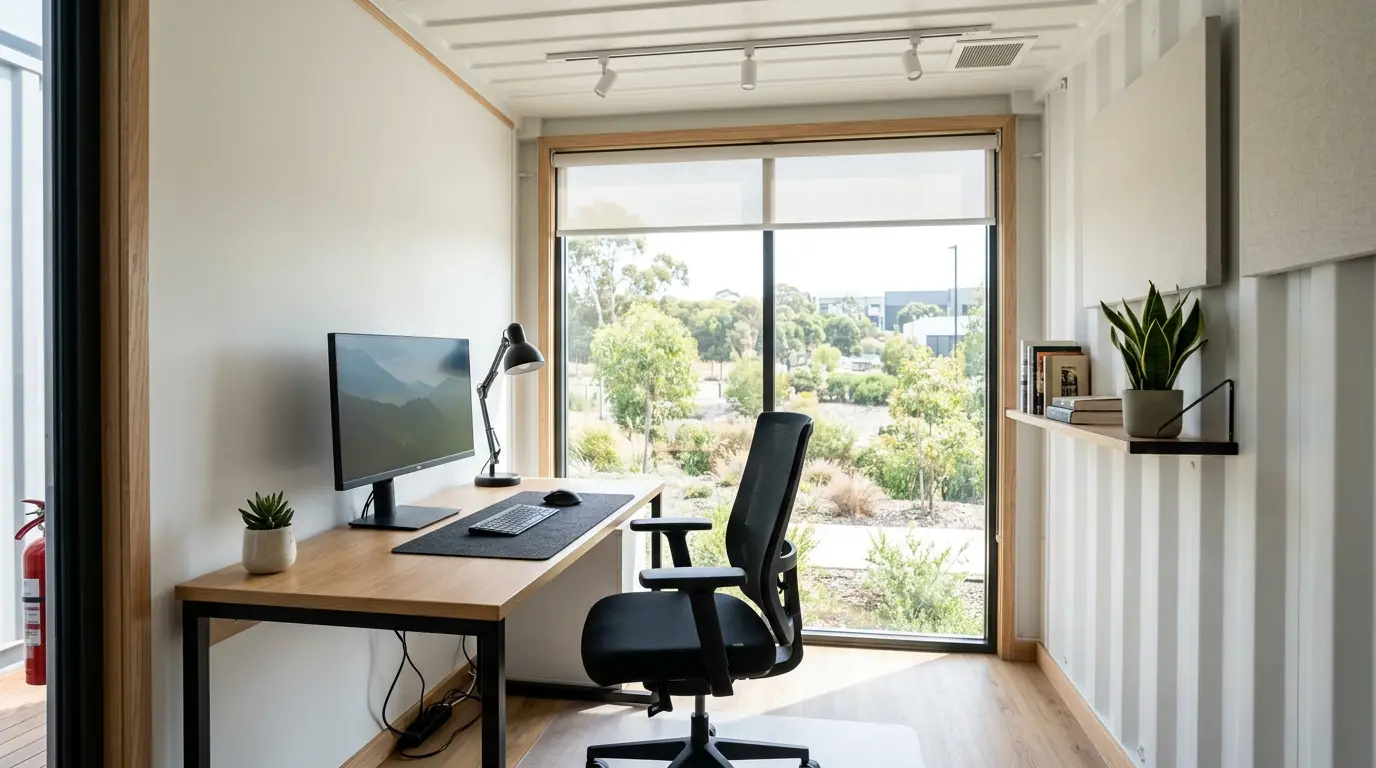
- Garden studio or home office with its own entrance away from the house
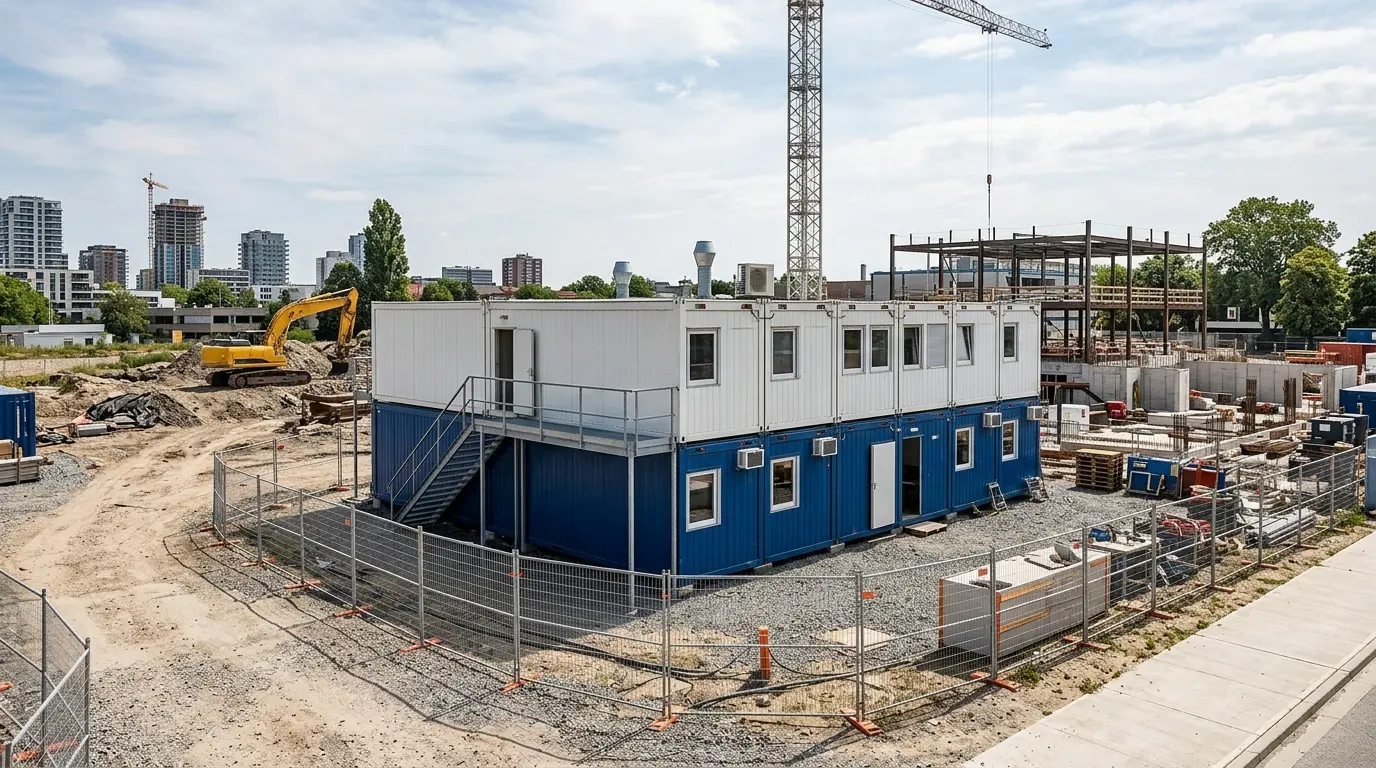
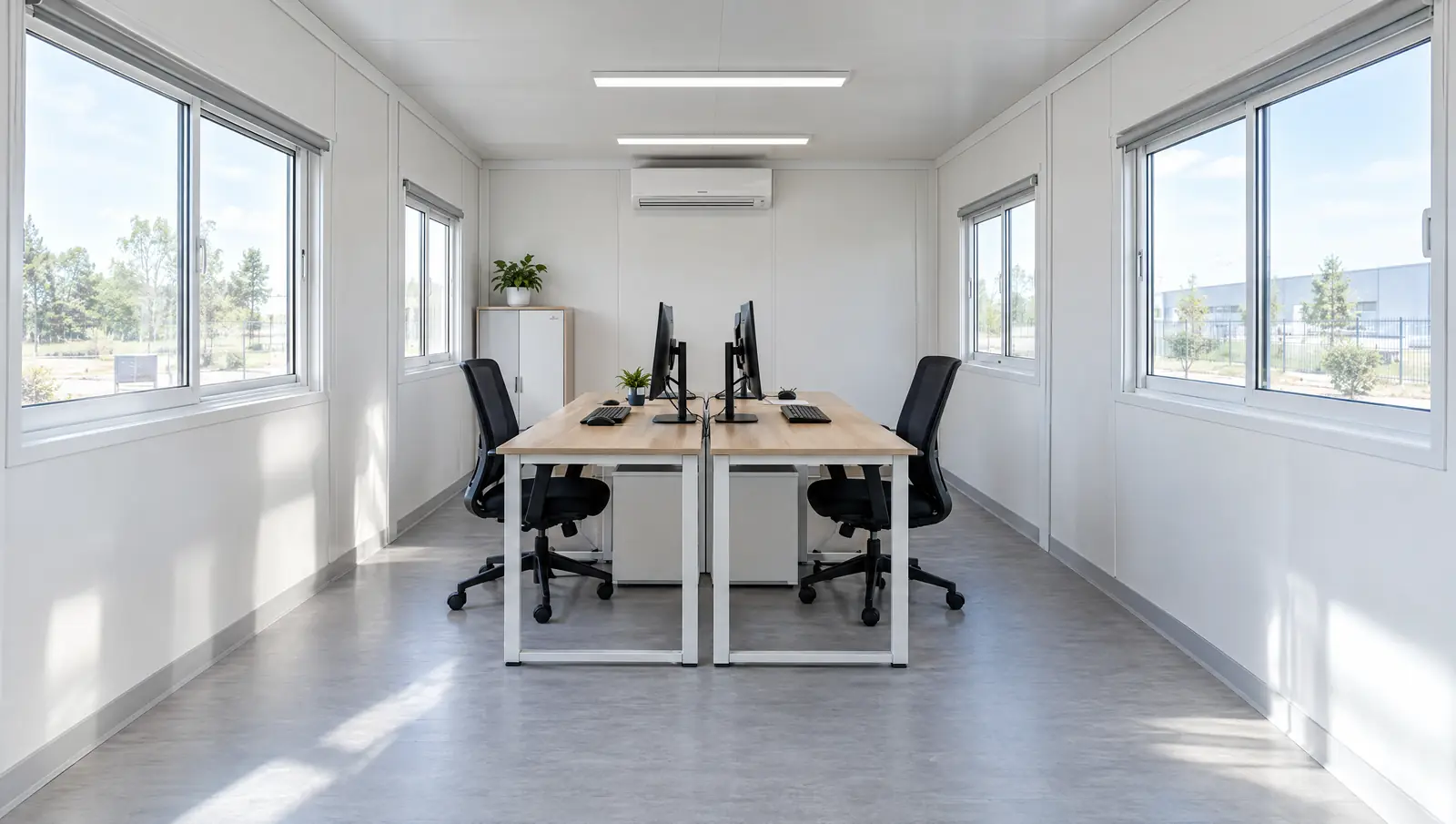
- Accommodation for fitters and staff on assignments and major projects
- Interim home during conversion, refurbishment or new build
- Annexe or guest house for visitors and multi-generation living
- Holiday letting as a glamping unit or tourist accommodation
- Housing for apprentices, students and seasonal workers on company grounds
Sizes and dimensions
| Basis | Floor area approx. | Typical layout | Suitable for |
|---|---|---|---|
| 20 ft room container | 13 m² | living/sleeping room, wet cell | worker room, guest room |
| 40 ft high cube (conversion) | approx. 25–26 m² | kitchen-living, bathroom, sleeping nook | tiny house for 1–2 people |
| 2 × 40 ft HC coupled | approx. 50–55 m² | living, kitchen, bathroom, 1–2 bedrooms | home for a small family |
| Modular complex | any | rooms with corridor and shared spaces | staff accommodation |
Floor areas after fit-out as rough orientation; actual area depends on insulation thickness and layout.
✓ Advantages
- Fast shell construction because modules arrive prefabricated
- Fully customisable from floor plan to finishes
- Relocatable and later expandable with further modules
- Predictable costs thanks to extensive prefabrication
- Small footprint keeps building, heating and upkeep costs down
! Points to consider
- Residential use always requires a permit and suitable building land
- Insulation and vapour control are critical against condensation and mould
- Energy standard requirements and certificates add effort
- Connecting water, waste water and electricity can be expensive
Equipment and options
- Winter-proof insulation of floor, walls and roof
- Well-insulated windows, sun shading
- Heating, preferably heat pump or air conditioner with heating mode
- Ventilation concept against condensation and mould
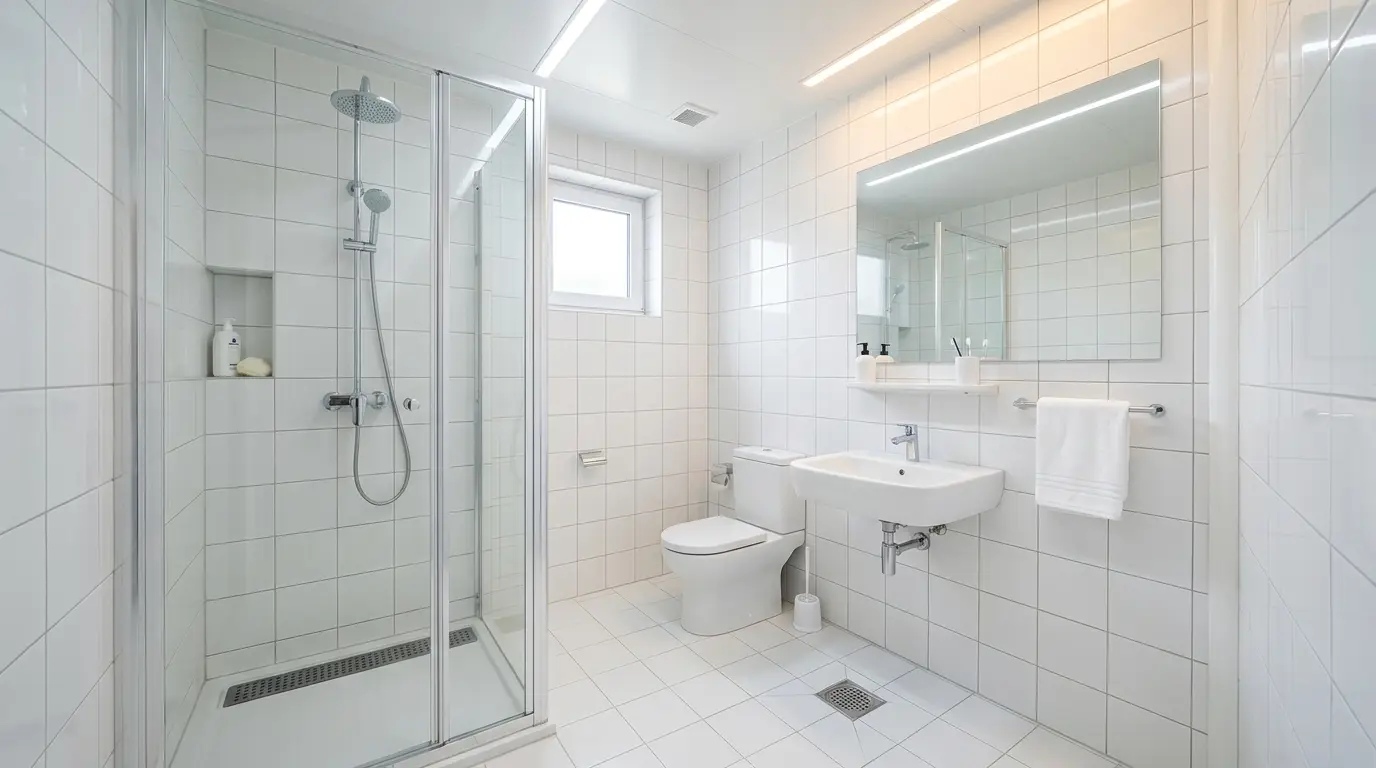
- Wet cell with WC, shower, basin
- Kitchenette, smoke alarms
Price guide
- Hire living module
- approx. €250 – 600 / month
- Converting a 40 ft into a tiny house
- see the tiny house costs guide
- Servicing
- water, sewage, power often the largest single item
Rough orientation values without guarantee; prices vary by region, condition and market.
What to look out for
- Clarify permission before buying: permanent living almost always requires a permit.
- Plan with a high cube, otherwise headroom is missing after insulation.
- Take thermal bridges and ventilation seriously – they decide between mould and a healthy indoor climate.
- Get servicing costs quantified in advance; they often exceed the container price.
- For worker accommodation, compare hire modules with sanitary fittings rather than converting yourself.
Frequently asked questions
Can you live in a container permanently?
Yes, if the container is approved as a residential building and meets the requirements for fire safety, thermal insulation, daylight and servicing. Without approval permanent living is not permitted.
Is a living container warm enough in winter?
With adequate insulation, good heating and a strategy against thermal bridges, yes. A basic site container is not designed for it.
Related guides
Planning with living containers?
Compare sizes, costs and buying vs. renting in our guides.