Changing room containers
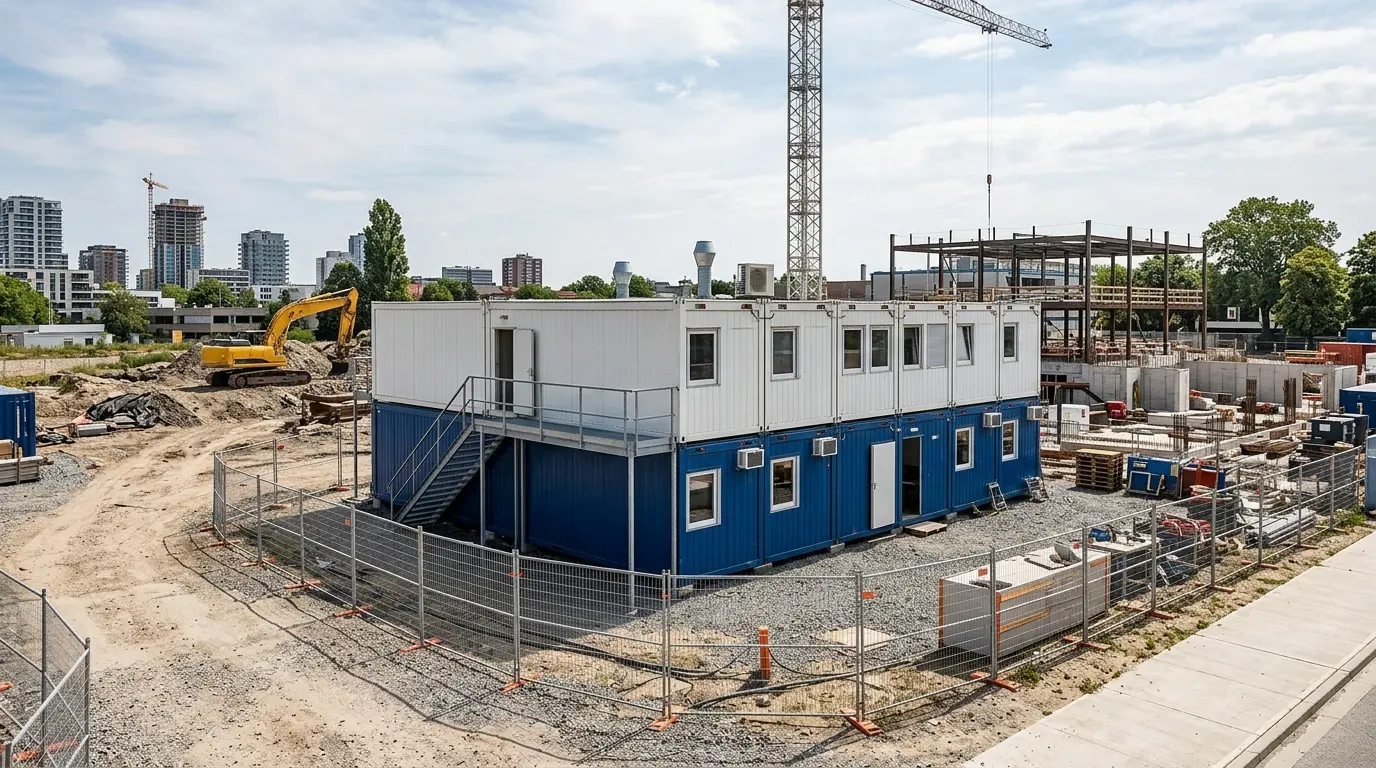
Changing room containers are insulated room containers fitted with lockers, benches, coat hooks and often a drying facility. They are used wherever people need to change into work or sports clothing and no permanent room is available: on construction sites, in businesses during refurbishment, at sports grounds and at events.
For employers this is more than a matter of comfort. The German technical rule for workplaces ASR A4.1 describes when changing rooms must be provided and what they should offer – such as separate use or privacy screening, enough space, storage for clothing and, where needed, drying for wet work clothing. Where work involves dirt or hazardous substances, clean/dirty separation is added.
Typical uses
- Changing room for site staff with drying for wet clothing
- Clean/dirty unit for remediation work, e.g. involving asbestos or other pollutants
- Interim changing room for businesses during refurbishment or extension
- Changing rooms for sports clubs at grounds without a clubhouse
- Changing and shower modules for the swimming season or pool refurbishment
- Dressing rooms for performers at festivals and events
Sizes and dimensions
| Module | Floor area approx. | Fit-out (example) | People approx. |
|---|---|---|---|
| 10 ft | 6 m² | 4–6 lockers, bench, coat rack | 4–6 |
| 16 ft | 10 m² | 6–10 lockers, benches | 6–10 |
| 20 ft | 13 m² | 8–12 double lockers, benches, drying | 8–12 |
Practical guide values. The area actually needed per person depends on use and is described in ASR A4.1; with shift work, count the people changing at the same time.
✓ Advantages
- Quickly available, often as a hire module
- Can be coupled with a sanitary container into one unit
- Separate modules for genders or shifts possible
- Usable in winter with heating and drying
! Points to consider
- Quickly damp and smelly without ventilation
- Lockers and benches take space – fewer people per module than expected
- Clean/dirty separation needs several rooms in sequence
- Outdoors, steps or a ramp are needed
Equipment and options
- Double lockers to separate street and work clothing
- Benches, coat hooks, mirror
- Heating and drying heater or drying cabinet
- Extract fan against humidity and odour
- Slip-resistant, easy-clean floor covering
- Optional: showers, wash trough, boot wash, clean/dirty airlock
Price guide
- Hire 20 ft changing room
- similar to a furnished break container
- Purchase
- room container plus lockers and drying
- Clean/dirty unit
- considerably dearer, usually hired per project
Rough orientation values without guarantee; prices vary by region, condition and market.
What to look out for
- Plan by the number of people changing at the same time, not total headcount.
- Provide effective extraction – wet clothing and many people generate a lot of moisture.
- Couple changing room and shower directly so nobody has to walk outdoors between modules.
- For pollutant remediation, have the clean/dirty separation specified by a specialist; it follows its own rules.
- For clubs: seasonal hire modules are often cheaper than buying if the need is seasonal.
Frequently asked questions
Does an employer have to provide a changing room?
Under the German Workplace Ordinance and ASR A4.1, generally when employees must wear special work or protective clothing and cannot reasonably be expected to change in another room. The details depend on the business.
What does clean/dirty separation mean?
A room layout in which dirty clothing and clean clothing stay in separate rooms, often with a shower room between them. This keeps dirt or pollutants out of the clean area. Container complexes implement it with several coupled modules.
Related guides
Planning with changing room containers?
Compare sizes, costs and buying vs. renting in our guides.