Flat rack containers
Strictly speaking a flat rack is no longer an enclosed container but a loading platform with container dimensions: a reinforced floor, two end walls and the usual corner castings. There are no side walls and no roof. Depending on the design the end walls are fixed or collapsible; empty flat racks with collapsible ends can be stacked to save space.
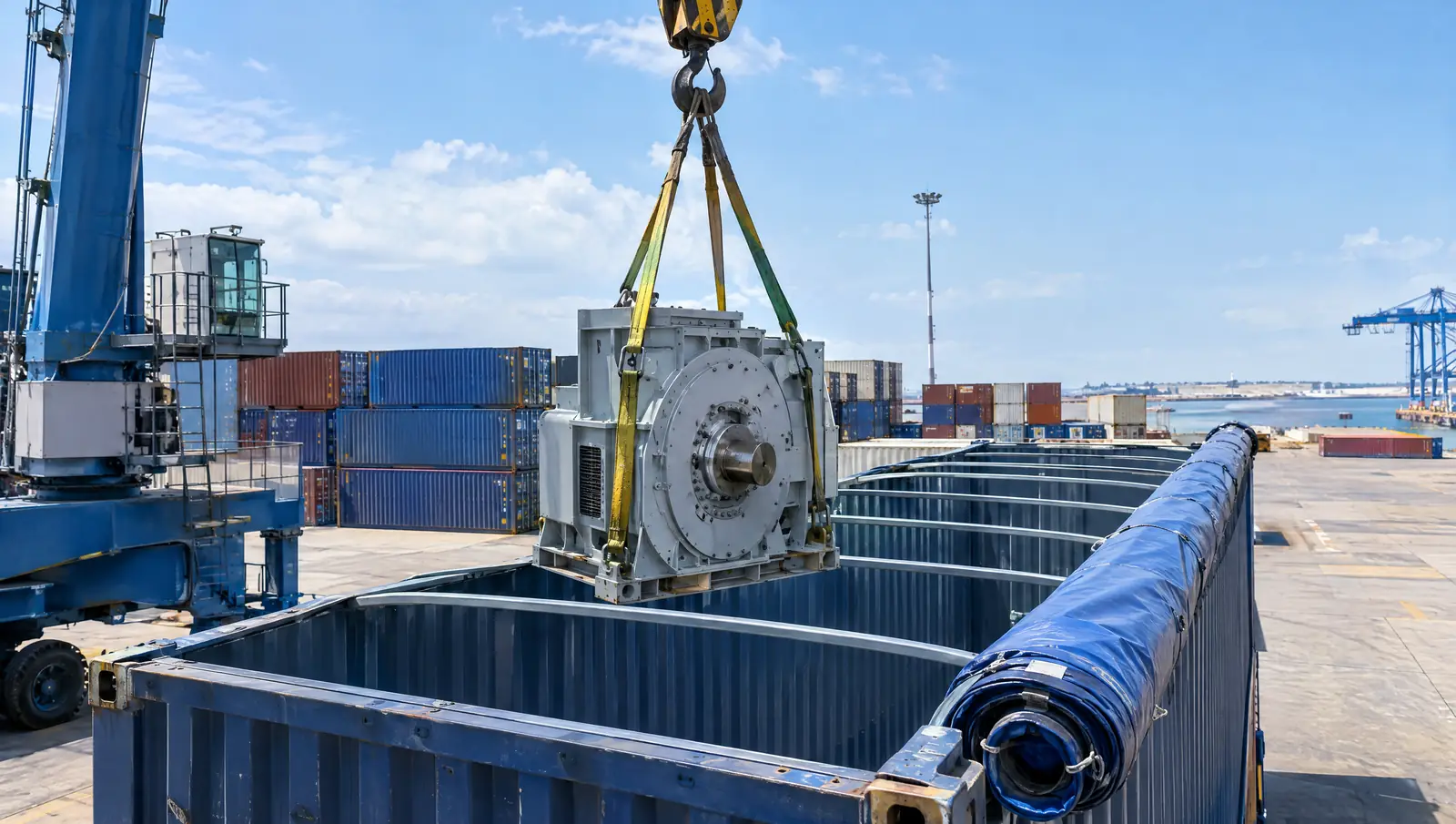
They carry goods that fit into no enclosed container – too wide, too tall or too heavy to load through a door: construction machinery, boats, vehicles, cable drums, transformers. For private and business customers on land, the flat rack plays almost no role; anyone who meets one is usually dealing with overseas shipping or project cargo.
Typical uses
- Overseas shipping of construction machinery, tractors and commercial vehicles
- Boats and yachts wider than a container
- Cable drums, pipes, steel beams and plant components
- Transformers and heavy industrial components
- Platform for exhibition and stage building with container logistics
Sizes and dimensions
| Size | External L × W | Deck | Note |
|---|---|---|---|
| 20 ft flat rack | 6.058 × 2.438 m | approx. 5.6–5.9 m long | end wall height varies by maker |
| 40 ft flat rack | 12.192 × 2.438 m | approx. 11.6–12.0 m long | for long items |
Payload, end wall height and lashing point layout vary widely between manufacturers. The data sheet and the CSC plate of the specific rack are authoritative.
✓ Advantages
- Takes over-width and over-height cargo
- Loading from above and from the side
- High load capacity thanks to a reinforced floor
- Empty racks with collapsible ends stack compactly
! Points to consider
- No protection against weather or theft
- Demanding load securing with lashing equipment
- Over-width or over-height makes transport dearer and needs permits
- Practically unsuitable for stationary storage
Equipment and options
- Reinforced timber or steel floor
- Fixed or collapsible end walls
- Numerous lashing points and stake pockets
- Corner castings for craning, stacking and locking
Price guide
- Purchase
- well above a standard container, little used supply
- Transport
- surcharges for over-width and over-height, permit costs
- Typical
- booked as part of sea freight rather than bought
Rough orientation values without guarantee; prices vary by region, condition and market.
What to look out for
- Have load securing planned by a specialist; for project cargo it is a trade in its own right.
- Clarify over-width early – it affects road haulage, port handling and stowage on board.
- If you just want to park a machine on land, you do not need a flat rack; a paved area with a tarpaulin is cheaper.
Frequently asked questions
Can a flat rack be used as storage on my plot?
It can, but offers little: it protects neither from weather nor from theft. It only makes sense if the material will later travel onward by container logistics anyway.
Do I need to buy a flat rack to ship a machine?
Usually not. Flat racks are booked from the shipping line or forwarder for the voyage and returned afterwards – just like an ordinary shipping container.
Related guides
Planning with flat rack containers?
Compare sizes, costs and buying vs. renting in our guides.