Open side containers
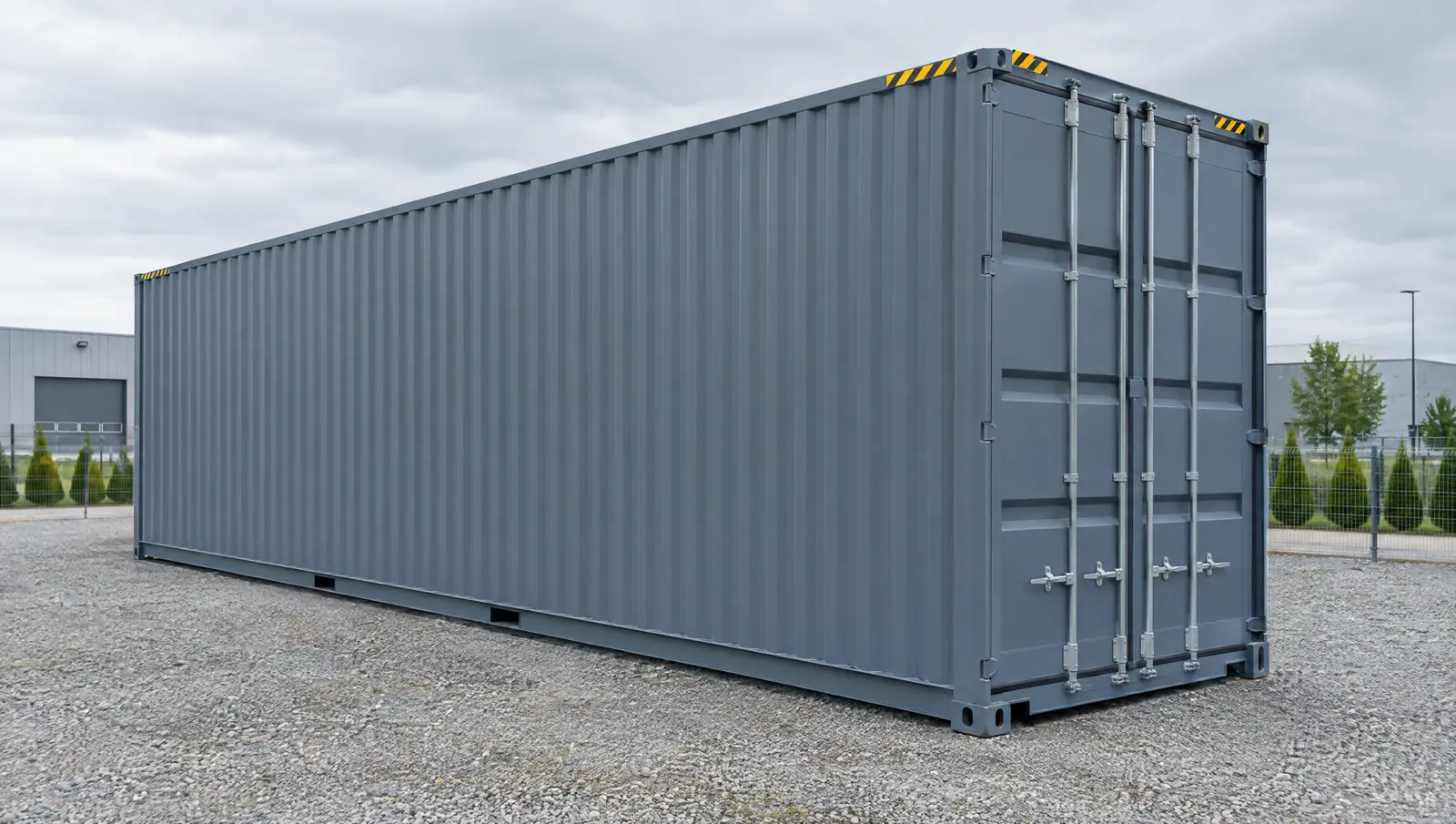
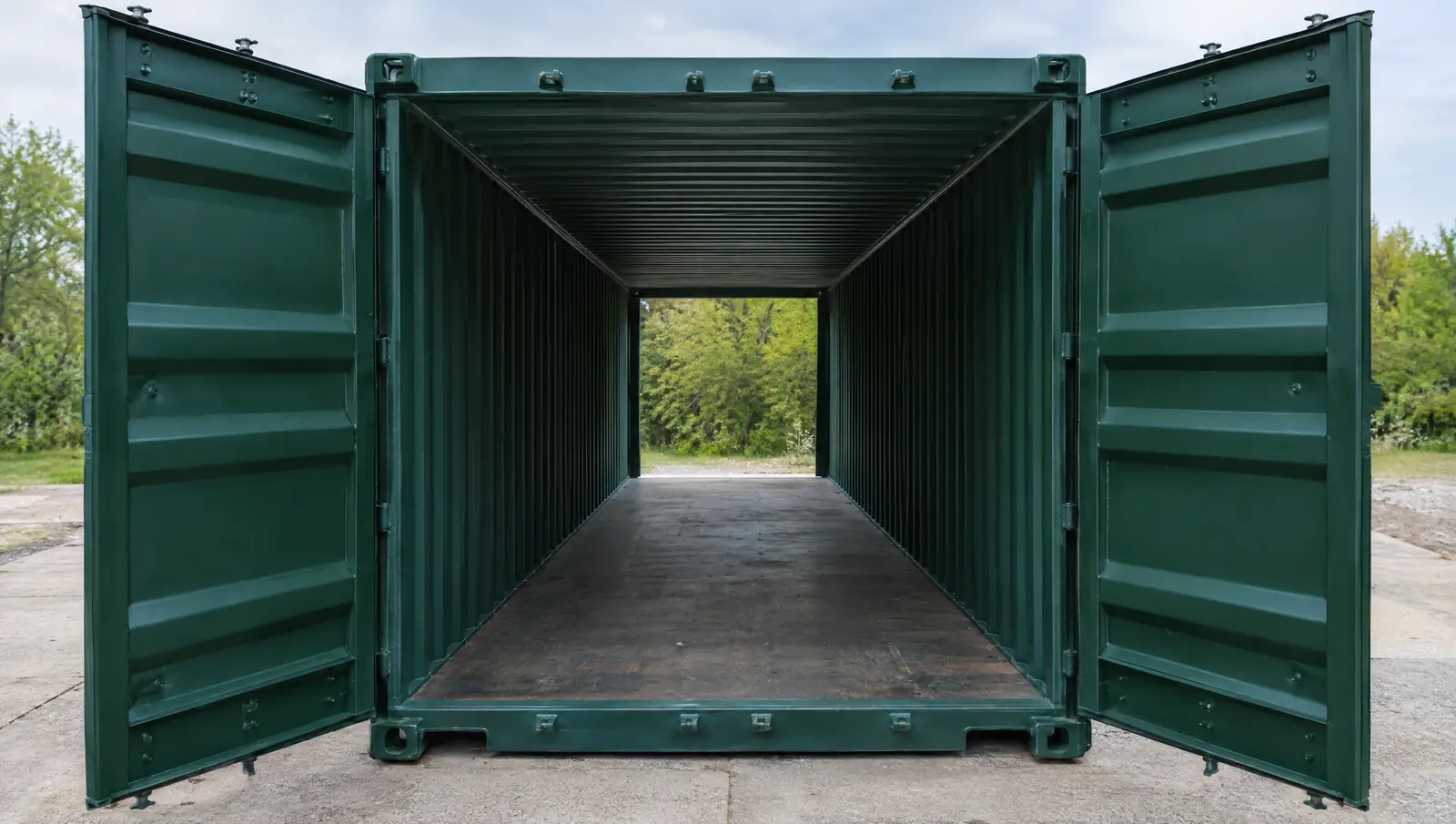
An open side container has one entire long side that opens. Instead of a steel wall there is a row of hinged doors secured with locking bars. When open, the interior is accessible over almost its full length – in addition to the normal end door.
The benefit shows in daily use: in an ordinary storage container you can only reach the back shelf by clearing out everything in front. With an open side every shelf sits right at the opening. For tradespeople, clubs, exhibition builders and retailers who need different items every day, that is the decisive advantage. In the trade, the 40-foot high cube open side is one of the most sought-after variants.
Typical uses
- Materials store for a trade business with shelving along the back wall
- Club store for marquees, benches, sports equipment and event kit
- Storage for pallets loaded and unloaded from the side by forklift
- Showroom or sales space with a fully opening front
- Covered workbench or stage when the doors are open
- Storage of long items such as pipes, profiles or battens across the opening
Sizes and dimensions
| Size | External L × W × H | Side opening | Note |
|---|---|---|---|
| 20 ft | 6.058 × 2.438 × 2.591 m | almost full length | compact, for businesses and clubs |
| 20 ft HC | 6.058 × 2.438 × 2.896 m | almost full length | more height for racking |
| 40 ft HC | 12.192 × 2.438 × 2.896 m | almost full length | most popular version |
The exact clear width and height of the side opening depend on the manufacturer – request the data sheet before buying, especially if pallets or racking are to be matched to it.
✓ Advantages
- Direct access to every shelf – no more shuffling stock
- Side loading by forklift, several pallets side by side
- End door remains usable as well
- Can serve as an open front for sales or events
! Points to consider
- Considerably dearer than a standard container of similar size
- More doors mean more seals and more potential leaks
- Must stand perfectly level or the side doors jam
- More openings mean more locks if security is to be adequate
Equipment and options
- Hinged side doors with their own locking bars
- Regular end door on one short side
- Reinforced roof and floor frame compensating for the missing side wall
- Optional: lockbox per door pair, racking systems, lighting, ramps
Price guide
- 20 ft open side new
- roughly 1.5 to 2 × a 20 ft one-way
- 40 ft HC open side new
- roughly 1.5 to 2 × a 40 ft HC one-way
- Used
- rare on the market, price heavily condition-dependent
Rough orientation values without guarantee; prices vary by region, condition and market.
What to look out for
- Set it on perfectly level, load-bearing ground – even a few centimetres of twist make side doors jam.
- Check every door seal at handover and record it; with so many seals, each is a potential weak point.
- Plan racking so the door leaves swing freely and the locking bars stay reachable.
- For security, protect every door pair with its own lockbox.
- If you only rarely need the back shelves, a double door container is often enough – and cheaper.
Frequently asked questions
Is an open side container as watertight as a normal one?
It can be, but it has far more seals. New units are generally tight; with used ones, checking every door seal matters more than with a standard container. Level siting is essential because distorted doors no longer close properly.
Can a standard container be converted to open side?
Technically yes, economically rarely sensible. The side wall is part of a shipping container's structure; removing it requires substantial frame reinforcement. A factory-built open side is almost always the better solution.
Can open side containers be stacked?
The corner castings are the same as on a standard container. The permitted stacking load is stated on the CSC plate of the specific container.
Related guides
Planning with open side containers?
Compare sizes, costs and buying vs. renting in our guides.